

You might have noticed your electricity bill creeping up again and assumed it was just inflation, more gadgets, or high fuel prices. But lurking behind the numbers is a culprit that doesn’t always make the news: massive data centers, humming 24/7, gobbling up electricity, and quietly reshaping our energy landscape. In Michigan, this quiet revolution has big consequences, for our wallets, our climate goals, and even our communities.
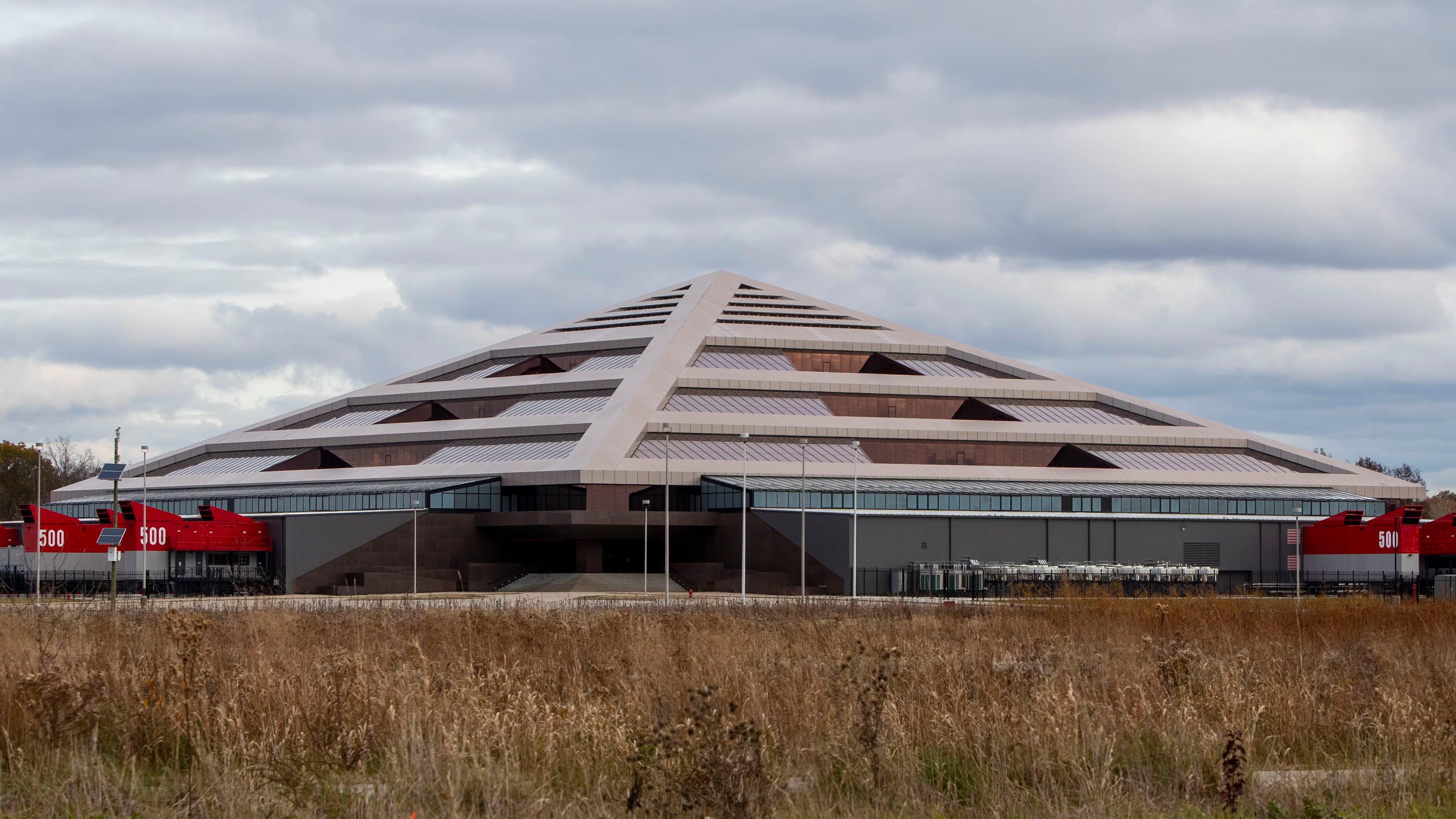
Michigan Providing Tax Breaks for Big Tech
Michigan has opened the door wide for tech giants, laying out a banquet of tax breaks disguised as economic development. In 2024, the state passed Public Act 207 (House Bill 4906), extending sales tax exemptions on data center equipment all the way through 2050, with additional perks for sites on brownfields (former industrial properties that are more unsafe to develop on) through 2065. Soon after, Public Act 181 (Senate Bill 237) added a use tax exemption for massive data centers, sweetening the deal for companies like Google, Microsoft, and Switch, companies worth trillions of dollars owned by billionaires.
On paper, these bills are sold as job creators and engines of economic growth. In reality, they are a direct transfer of public money into corporate coffers. Data centers are promised as economic engines, but the jobs they generate are limited and often low-paying relative to their massive footprint and environmental destruction they do the area and people around them. And if the data center is built on a brownfield there is no job creation quota at all. Meanwhile, taxpayers quietly shoulder the cost, footing the bill for infrastructure upgrades, energy demand, and environmental safeguards that these companies aren’t required to fully fund.
In essence, Michigan isn’t just attracting tech companies, it’s handing them a hefty slice of your tax dollars, a multi-decade subsidy that boosts corporate profits while shifting risk and expense onto the residents and environment of the state. And that’s before we even get to how this affects your monthly budget.
The Hidden Appetite of Data Centers
Server farms are the backbone of AI, cloud computing, and “smart” technology, but your typical electricity consumers. They run day and night, year-round, and their energy needs are inflexible. Recent studies show that data centers already consume around 4% of U.S. electricity, a share that could triple in the near future as AI workloads explode. And it’s not just raw consumption; their constant, high-demand patterns push utility companies to upgrade infrastructure and sometimes on fossil-fuel generation to meet the load.
Last week, Ypsilanti City Council has passed a resolution against the University of Michigan–Los Alamos National Laboratory data center. Ypsilanti challenges the project’s secrecy and potential environmental fallout. The center, pitched as a high-performance computing hub, would demand enormous water and electricity resources raising alarms in a region already battling rising utility costs and climate strain. For Ypsilanti residents, the question is simple: who benefits from this “innovation,” and who pays the bill?
For Michigan, where utilities like DTE and Consumers Energy are actively courting data center projects, the stakes are high. Consumers Energy and DTE are planning to add up to 22 gigawatts of new power demand, much of it driven by data centers. A single 1-gigawatt facility could raise residential electricity rates by 5%–10% if precautions aren’t taken. Analysis from publications like Bloomberg have shown that in regions experiencing heavy data center growth, wholesale electricity prices have jumped by over 200% compared to previous years, meaning every residential bill is quietly subsidizing these tech giants. Money out of your pocket to front the bill for what giant corporations in addition to their tax breaks.
A Danger To Our Lakes And More…
Energy isn’t the only thing these data centers use in large, unsustainable amounts. They also need huge amounts of water to keep their computer servers cool. Some centers use millions of gallons every day.
In Michigan, water isn’t just a basic need—it’s also an important part of our environment and our recreation. Using so much water can cause serious problems, like lowering aquifers (underground layers of rock that hold water and supply wells) and disrupting river flow (how water naturally moves through rivers and streams).
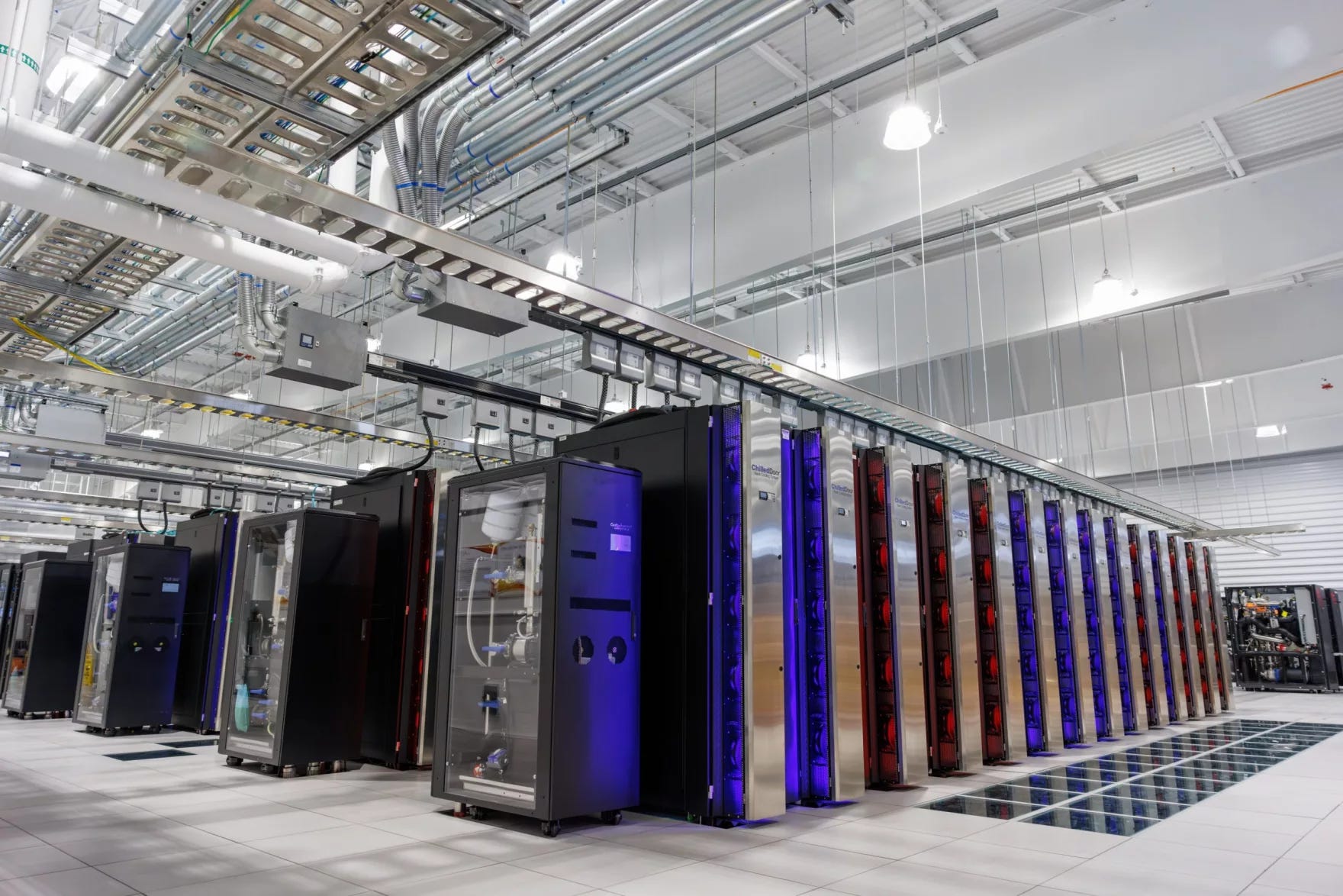
A report from Bridge Michigan and the Alliance for the Great Lakes highlighted that many Michigan communities are unprepared for this scale of industrial water use. In places like Livingston County and Oakland County, proposed facilities would draw on municipal water supplies or private wells, potentially straining existing systems and putting neighbors at risk of shortages. Water-intensive cooling also produces warm discharge, which can alter local ecosystems and harm fish populations. In a state famous for its lakes and rivers, this environmental impact carries both ecological and economic consequences.
How the Data Center Duels Are Playing Out In Michigan
Two rural flashpoints, in Saline and Howell, have turned into case studies of how Big Tech’s hunger for land, water, and electricity collides with small-town values. It also shows how communities are starting to fight back against Michigan lawmaker’s courtship of massive data centers.
In Saline, a development firm called Related Digital wanted to transform 575 acres of farmland into a sprawling complex of data halls and warehouses. The pitch was classic tech bro speak: jobs, investment, innovation. But locals saw the loss of prime farmland, pressure on water systems, and a deal made too fast for comfort. In September 2025, the township board voted 4–1 to reject the rezoning request from agricultural to industrial. Related Digital and the landowners promptly sued, claiming the township’s zoning was “exclusionary.” A month later, officials quietly settled, allowing the project under tight conditions: water-use limits, noise caps, and a promise to preserve some open farmland.
Just a 45-minute drive from Saline, in Howell, a nearly identical drama unfolded, only bigger. A Fortune 100-backed developer sought to rezone 1,000 acres of farmland into a “research and technology district” which included a massive data campus. Residents packed a seven-hour planning commission meeting, demanding answers about water, energy, and transparency. The commission voted unanimously to recommend denial, and the developer pulled its application before the next vote.
Together, these battles reveal the uneasy marriage between Michigan’s push for tech investment and the communities asked to host it. The state touts new tax incentives for data centers, but locals are asking harder questions: Who benefits? Who pays for the power lines, the water mains, the noise? When the cloud moves into the countryside, it brings with it the full weight of digital modernity — and the people on the ground are deciding whether that’s progress or intrusion.
When you open your next electricity bill, don’t just blame inflation blame Big Tech. Michigan’s data center boom isn’t innovation; it’s exploitation. We should NOT be bending over backwards to give even more tax breaks to billionaires while making Michiganders pay even more. These data centers are NOT providing thousands of jobs, they are paying for Mark Zukerbergs’s next failed VR project. When you see your town asking to build one of these data monstrosities remember this:
You’re paying their tab: Taxpayers are footing the bill for billions in corporate tax breaks while utilities raise YOUR rates to cover Big Tech’s greed.
Our grid is maxed out: Every new data center strains Michigan’s already fragile energy system, driving up costs and pushing utilities back toward coal and gas.
Our water is on the line: Facilities are sucking up millions of gallons a day, threatening local aquifers, heating rivers, and endangering the Great Lakes ecosystem.
Our progress is unraveling: Just as Michigan began making gains toward clean energy, Big Tech’s “AI boom” is dragging us backward. And should the AI bubble burst, Michiganders will be footing the bill for the losses.
Michigan’s leaders promised jobs and prosperity. What we got instead is corporate welfare, higher bills, and a looming environmental disaster. If Lansing doesn’t wake up, the Great Lakes State could soon be defined not by its water, but by how quickly it let Big Tech drain the lakes and all of us dry.
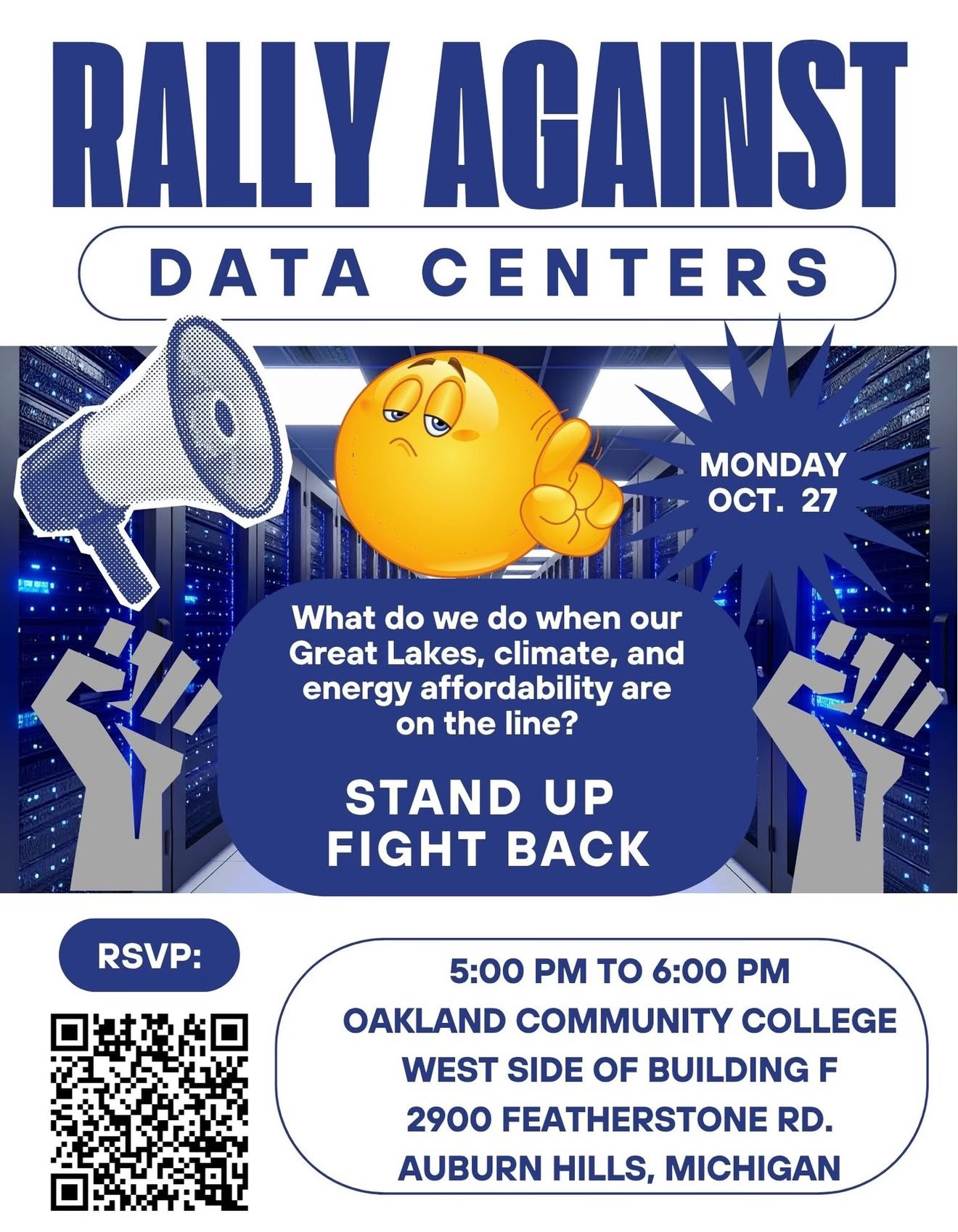
There is a rally against data centers tonight!
📱 P.S. Have you downloaded our new app yet?
Get the latest political news, action alerts, and updates on the fights that matter all in one place. Whether it’s calling out corruption, learning about Michigan’s ballot initiatives (plus where to sign or volunteer), or finding a protest near you, our app makes it easy to plug in and show up.
👉 Click to download the Distill App in the App Store or Google Play. Let’s stay informed together.
Follow us on FACEBOOK to get all the news the oligarchs won’t print.
Electricity now costs up to 267% more than it did five years ago in areas near data centers.
I live in Howell. This fight is NOT OVER. The residents are strongly against the data center but our township board is being influenced by prominent people in our area that the data center and DTE are courting. We are requesting a moratorium. Some board members have come out against that. They have had this in their hands for TWO MONTHS. We need more time for them to complete the studies and the board is going to push it through. PLEASE SHED LIGHT ON THIS!